

Facing a decision between dental implants vs. dental bridge? Both options restore a missing tooth, and both are widely used. But they work differently, age differently, and have very different effects on the surrounding bone and teeth. Understanding those differences is the key to choosing what holds up best over time.
Key Takeaways
- A dental implant replaces the tooth at the root level; a bridge restores only the visible crown portion.
- Implants preserve jawbone by stimulating it like a natural root; bridges allow gradual bone resorption beneath the gap.
- Bridges require permanently altering two healthy neighboring teeth to serve as anchors for the restoration.
- Implants are designed to last decades with proper care; bridges typically need replacement after 10 to 15 years.
- Both are clinically effective, but the smarter long-term investment often favors implants for eligible patients.
How Each Option Actually Works
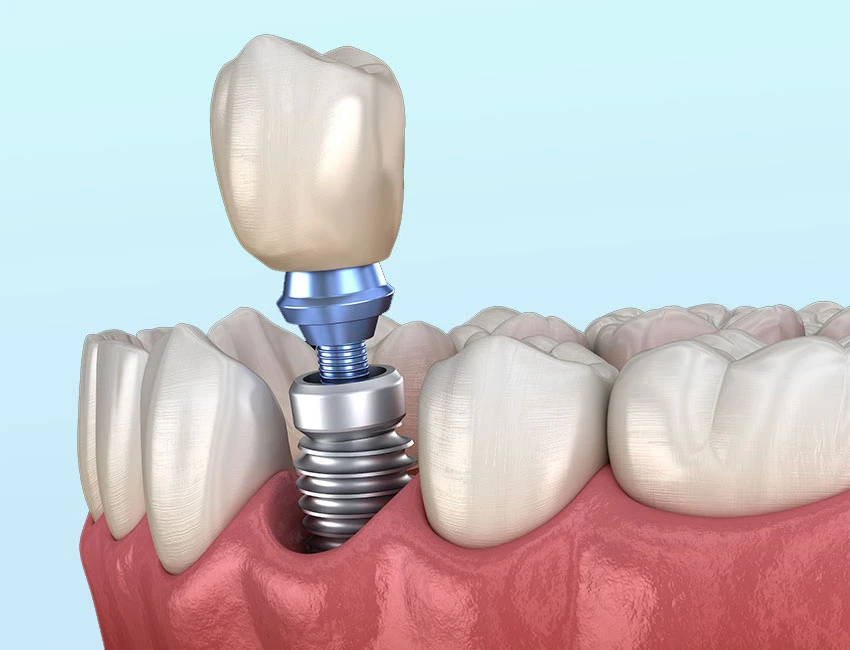
A dental implant is a titanium post placed directly into the jawbone. Over several months, the bone fuses with the post in a process called osseointegration. Once integrated, a crown is attached on top and the implant functions like a natural tooth root from that point forward.
A dental bridge spans the gap left by a missing tooth. It consists of a false tooth held in place by crowns cemented onto the two adjacent teeth. To place those crowns, the neighboring teeth must be filed down permanently—an irreversible step that affects teeth that may otherwise be healthy.
How Do They Compare Where It Matters Most?
The differences between dental implants vs. dental bridge become most apparent when you look at long-term outcomes:
- Bone health: Implants stimulate the jawbone during chewing, preventing the bone loss that follows tooth loss; bridges leave the bone beneath the gap unstimulated, allowing gradual resorption to continue
- Impact on adjacent teeth: Bridges require permanently altering two healthy neighboring teeth; implants stand independently and leave surrounding teeth completely untouched
- Longevity: A well-maintained implant can last 20 years or more; bridges typically need replacement after 10 to 15 years as supporting teeth and underlying bone change over time
- Oral hygiene: Implants are cleaned like natural teeth with regular brushing and flossing; bridges require special floss threaders to clean beneath the false tooth where plaque tends to accumulate
- Total cost over time: Bridges cost less upfront, but replacement cycles and potential decay beneath the crowns close the gap considerably over a 15 to 20 year window
When a Bridge Might Make More Sense
A bridge is a faster solution that does not require surgery or a multi-month healing period. For patients who cannot have surgery due to health factors or insufficient bone volume, it may be the more practical path forward.
It also makes more sense when the adjacent teeth already have large existing restorations. If those neighboring teeth were already going to need crowns, using them as bridge anchors does not represent the same trade-off as altering perfectly healthy teeth.
Why Implants Hold the Edge Long Term
The strongest argument for implants is bone preservation. After tooth loss, the jawbone in that area begins to shrink without a root to stimulate it. A bridge restores the visible tooth but does nothing for the bone beneath the gap—and that resorption continues quietly over the years.
Bone loss also affects the bridge itself over time. As the ridge changes shape, the false tooth may no longer sit flush against the gum, creating a gap where bacteria collect. An implant prevents this by keeping the bone stable and active.
There is also the matter of the anchor teeth. Teeth that support a bridge bear extra chewing load for the life of the restoration. Over time, that stress can contribute to wear or decay at the crown margins. An implant distributes force directly into the bone and places no additional burden on neighboring teeth.
The Smarter Investment Usually Comes Down to Time Horizon
For patients who are good candidates, implants consistently deliver more value over time. They preserve bone, protect neighboring teeth, and are built to last. Bridges offer a faster and lower-cost starting point, but their limitations compound as the years pass.
If you want to learn more about dental implants, visit our Dental Implants in Rancho Santa Margarita page or schedule a consultation.